Pegasus PRP
Leukocyte-Poor Platelet-Rich Plasma Kit

Decades of Research, Now in Your Truck
In a clinic, a barn aisle, or the back of your truck, Pegasus PRP produces a leukocyte-poor PRP in approximately 15 minutes. The Pegasus PRP Kit is closed, sterile, and single-use, supporting stall-side preparation using aseptic technique and the kit instructions.
When standardization isn't an option, the quality of the underlying kit is what determines your results. Pegasus PRP is built to capture the platelets and leave the red and white cells behind.
platelet concentration over whole blood¹
white blood cell reduction¹
red blood cell reduction¹
1. Pegasus PRP Kit Characterization: 153 consecutive preparations from 139 horses between March 17 and October 6, 2026, with 7 mL of PRP retained per device (14 mL per kit). The Pegasus field protocol retains 10 mL per device; the results are not extrapolated to that volume.
Built to Capture the Platelets
Findings from human cell culture, an equine PRP study, and a 2020 review.
Platelets carry growth factors. Released on contact with injured tissue, they drive matrix repair and have anti-inflammatory effects.² ³
More platelets, more anabolic growth factors. In equine blood products, TGF-β1 and PDGF-BB rose with platelet count.⁴
Platelets also modulate the immune response and stimulate new blood vessels.²
Leukocyte-Poor by Design
Findings from equine tendon culture and human clinical trials.
White cells drive inflammation. In equine tendon culture, higher leukocyte concentrations increased expression of IL-1β and TNF-α, two pro-inflammatory cytokines. Maintaining the platelet-to-white-cell ratio did not counteract this effect.⁵
The difference shows up in outcomes. In a rotator cuff repair meta-analysis, only leukocyte-poor PRP significantly reduced retear rates compared with controls.⁶ In knee osteoarthritis, leukocyte-poor PRP produced significantly better WOMAC scores than hyaluronic acid or placebo; leukocyte-rich PRP did not show a significant advantage.⁷
The Red Cells Stay Behind
Findings from human cell and tissue culture.
They may kill synovial cells. In culture, a red cell concentrate caused 12.5% synoviocyte death, against 0.72% for leukocyte-poor PRP; the authors' conclusion is to consider leukocyte-poor, RBC-free PRP for joints.⁸
They may injure cartilage. Four days in whole blood tripled chondrocyte apoptosis and left proteoglycan synthesis 74% inhibited after twelve days of recovery.⁹
Hemoglobin may contribute to the damage. Iron from lysed red cells can promote hydroxyl radical formation from hydrogen peroxide near chondrocytes.¹⁰ Plasma free hemoglobin can promote inflammation and oxidative stress in the surrounding microenvironment.¹¹
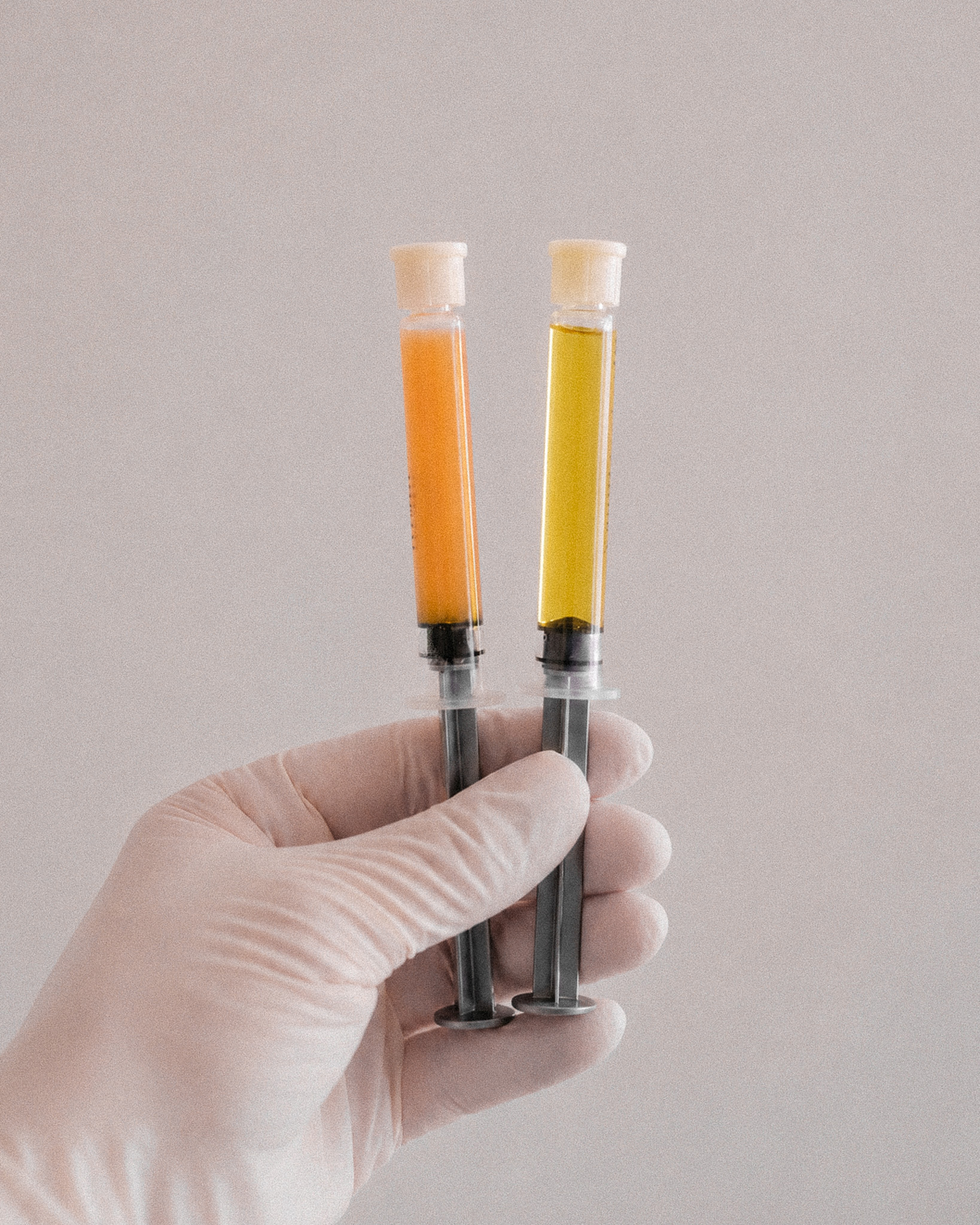
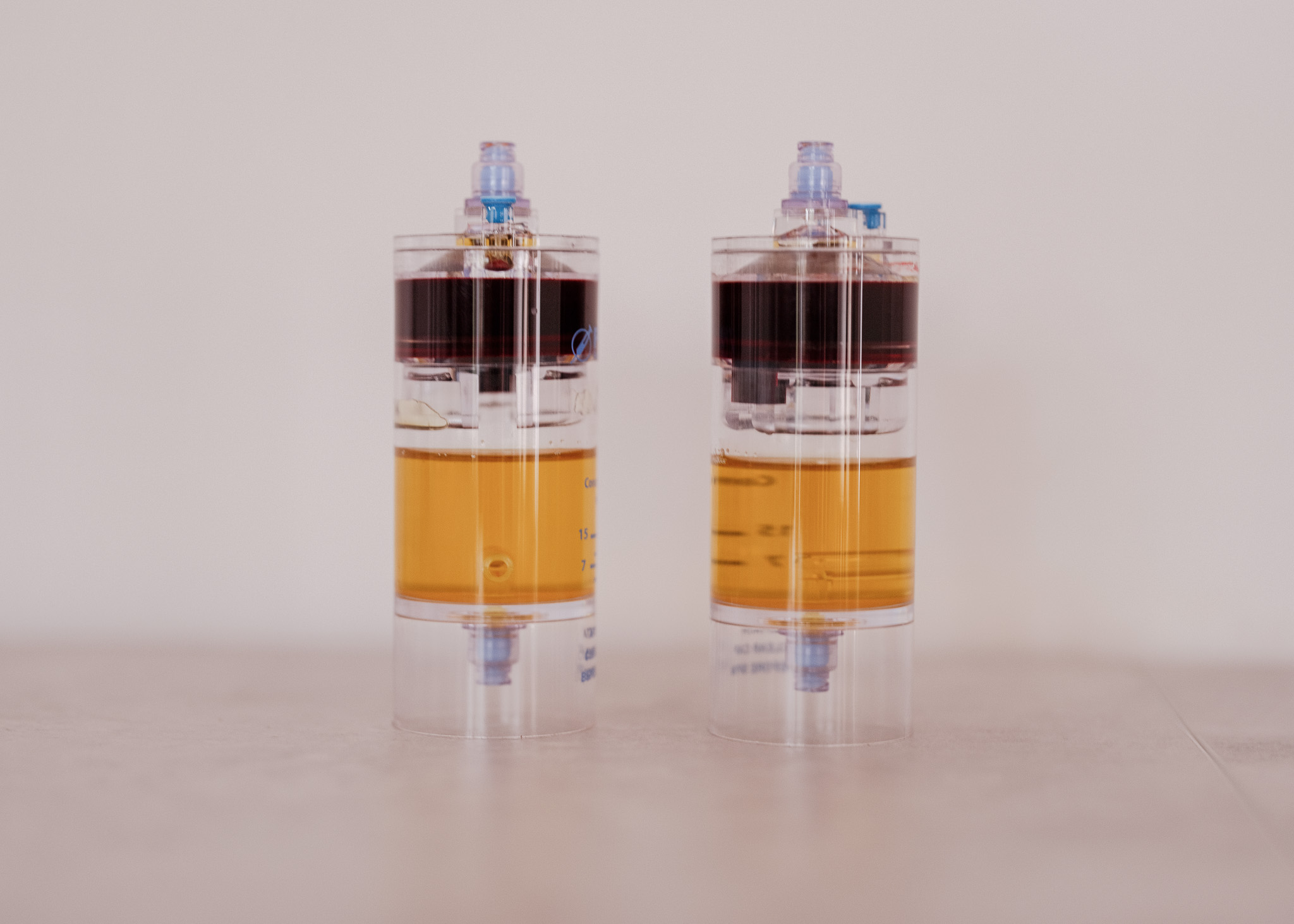
Left: PRP. Right: PPP.
One Kit. Two Products.
Platelet-Poor Plasma (PPP) is the plasma fraction remaining after platelet concentration.
WHAT IT CARRIES
IGF-1, HGF, and A2M
IGF-1 and HGF help regulate inflammation and fibrosis.¹² ¹³ A2M helps clear enzymes that break down cartilage.¹⁴
HOW IT'S USED
Muscle
Veterinarians use PPP in muscle. To rebuild muscle fibers, myoblasts must stop multiplying and fuse together, a step called differentiation. In laboratory studies, PPP promoted differentiation, while PRP mainly kept myoblasts multiplying.¹² ¹³
Order Pegasus PRP Kits
Pegasus PRP kits are sold directly to licensed equine veterinarians. Tell us a bit about your practice and we'll be in touch within one business day to confirm your order and arrange shipping.

Sapphire Centrifuge
The Sapphire Centrifuge is built for veterinarians who work where their patients are. At just 31 pounds, it's light enough to move from the truck to the barn aisle and set up in minutes.
Use It All in One Visit,
or Save Some for Follow-Up
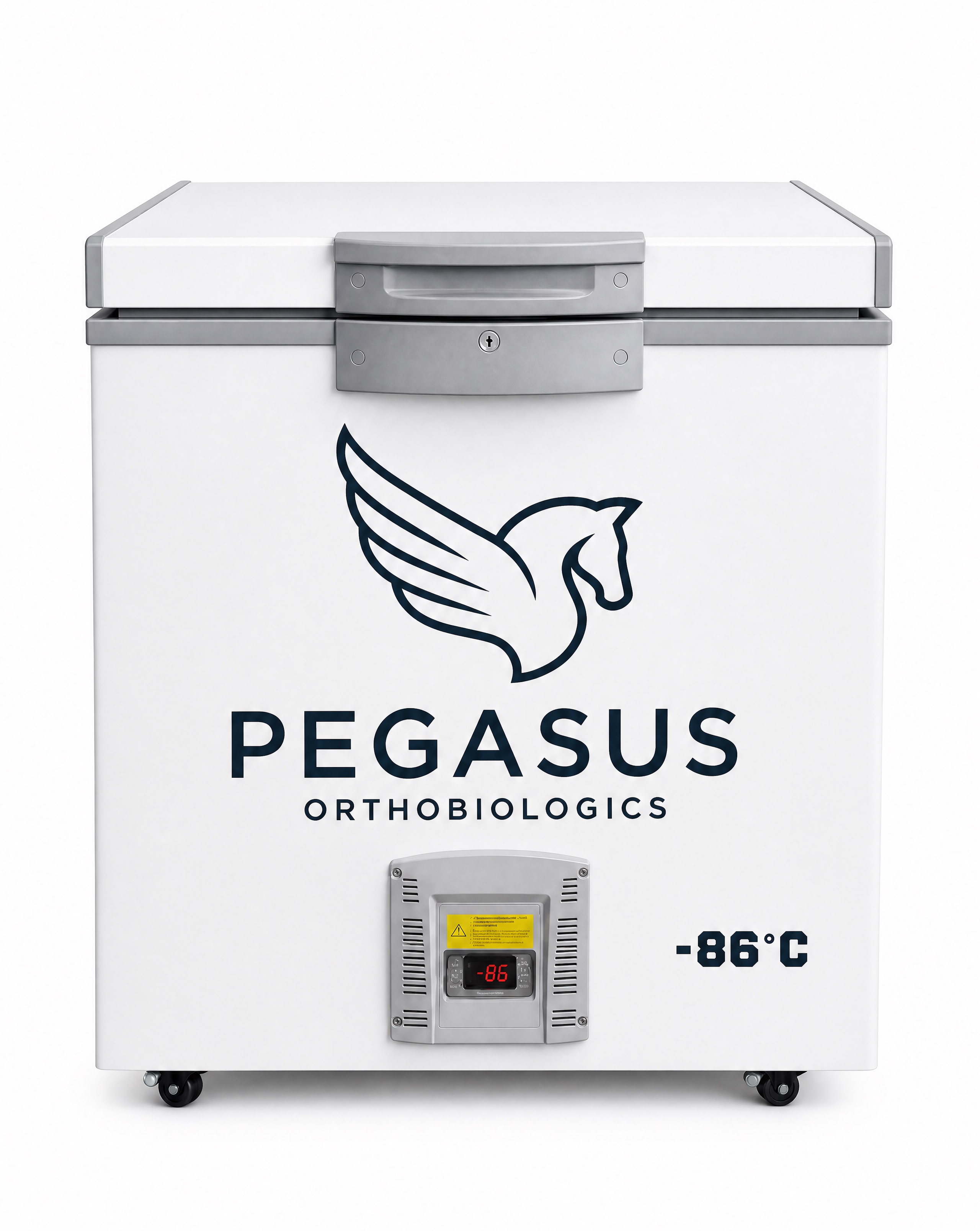
Depending on how many joints you're injecting, you can use all of a kit's PRP in one visit, or use part of it and keep the rest in the Pegasus Freezer for follow-up treatments. Pegasus recommends storing prepared PRP at −80 °C for up to six months.*
*Product-specific cytokine testing is ongoing.